


Dmytro Kovtun
/// CEO & CO-FOUNDER
Dmytro co-founded Pingle Studio in 2007. Since then, the company helped the world's best publishers and developers to release more than 60 games for the majority of gaming platforms.
A DLC usually follows the same arc. It launches on a Thursday, the weekend numbers look incredible, and by the following Thursday they've fallen off a cliff. And if you think the cause of failure is poor content, we can assure you it is something entirely different.
Pingle Studio has 18+ years of building and expanding games as a service for Epic Games, SEGA, EA, Square Enix, Take-Two, and more. We've watched DLC thrive and flatline from the inside, and the gap between the two almost always comes down to one thing: whether anyone planned for what happens after launch, or just shipped the content.
This article is about the LiveOps game development for a DLC. We'll walk through the framework we use and show it running on games you already know, at every scale from indie to AAA. We've already covered why most DLCs underperform and how to run DLC as a product. Here we’ll focus on how to keep the DLC alive.
TL;DR
- Most DLC dies from neglect after launch. Plenty of expansions launch to a packed server and sit near-empty two months later, and the content is rarely the problem.
- You don't need full LiveOps games (a standing live team, endless seasons, an always-on economy) to keep a DLC alive. You need LiveOps thinking.
- The LiveOps loop: Content → Data → Iteration → Revenue — is the habit that keeps a DLC earning for years.
- The loop doesn't need a big team. No Man's Sky ran it with ~10–15 people, Cyberpunk 2077 ran it on an AAA budget. Same four stages, different size.
- Give first, then expect player engagement: the free update comes before the paywall (that's how Cyberpunk went from 32K to 246K players before selling Phantom Liberty).
- The loop only works when one person owns it end to end. On Insurgency: Sandstorm, Pingle helped shape the game, and the player base tripled.
There are only two types of LiveOps
When Pingle's team ran Insurgency: Sandstorm at its peak, 56 people across eight departments were actively involved. That's the LiveOps most people picture when they hear the word, but it doesn’t have to be so.
But first, let’s handle the difference between DLC and LiveOps. What is DLC? Downloadable content is any add-on that extends a game after release: a new region, a character, a mode, a batch of missions. And what is LiveOps? A practice of running a game as an ongoing product after launch: shipping updates, watching how people play, and responding, rather than shipping once and moving on.
That second one is where the fear creeps in, because LiveOps and live service games get treated as the same thing. They aren't the same size. Your DLC doesn't need all the machinery a full live service game runs on. It only needs the answers to several core questions:
- What will we measure after launch?
- Where do players drop off?
- Who fixes it?
- What brings a player back?
That's the essence of "LiveOps thinking": running a game as a live product after it ships, instead of waving goodbye at the door.
Here’s how it looks in reality.
The LiveOps Loop through the example of No Man's Sky
In 2016, No Man's Sky launched into one of the ugliest receptions in modern gaming. Hello Games had about a dozen people. Most of the Internet filed it under a cautionary tale and moved on.
Eight years and dozens of free updates later, No Man's Sky reached a "Very Positive" all-time rating on Steam with recent reviews near 96%. Not one of those updates was sold as paid DLC.
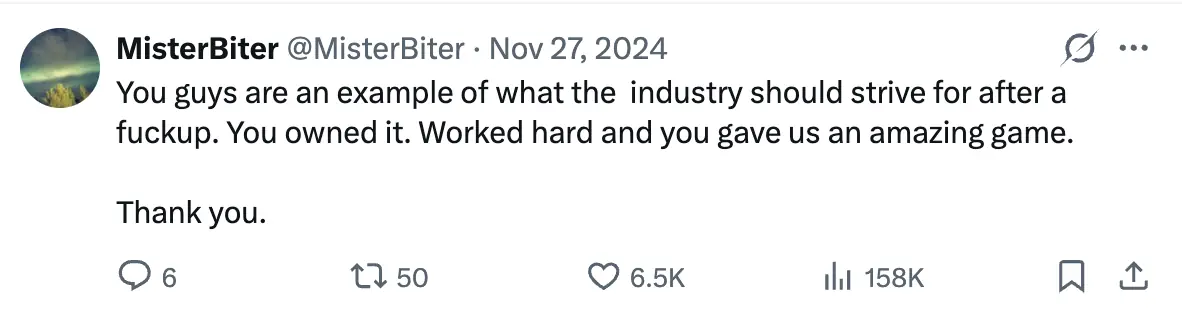
Every new drop did three jobs:
- Dragged lapsed players back
- Convinced skeptics to finally buy in
- Earned enough goodwill that players in the reviews now joke that Hello Games should be allowed to charge them.
That's the LiveOps Loop in practice:
- Content: you ship downloadable content, a small update, or a limited-time event.
- Data: you watch what players do with it, so user retention is continually measured and analyzed
- Iteration: you tune fast, while people are still paying attention.
- Revenue: player retention holds steady, and revenue arrives over a long tail rather than a single launch-week spike.

No Man's Sky did all of this with 10-15 people and no live-service economy underneath it. So as we can see, the team doesn’t have to be enormous. Content is what makes the difference.
Content is a reason for players to come back
Ghost Ship Games, the studio behind co-op shooter Deep Rock Galactic, once stopped calling their big drops "Update 35" and started calling them "Season 01." The logic is simple: "Update 35" sounds like an in-joke for people who already play, while "Season 01" gives a newcomer a reason to jump in right now.

Devs kept every seasonal item free and ran seasons for player retention rather than monetization. The game now sits around 97% positive across 360,000 Steam reviews.
Then came an iteration beat. Players who'd missed an old season felt locked out of its cosmetics, so Ghost Ship built "season reactivation", a chance to re-select a past season and earn its rewards again, still free. A churn point spotted in the data, then closed.
In all honesty, there will always be a curve: a spike when a season drops, and a dip in the weeks between. That dip isn't a sign of a failure, though. Look at it as a gap the loop has to solve. Content makes the spike; the loop handles the space in between.
But the rule of thumb is to always give and only then expect engagement. This is why free updates are so important.
A free update is the best way to give content to players
A month before its 2023 comeback, Cyberpunk 2077 was pulling about 32,000 concurrent players on Steam, which is quiet for a game that once cleared a million. Then CD Projekt Red shipped Update 2.0, a free overhaul of the core systems, to everyone who owned it. The game leapt to roughly 246,000 concurrent players, its highest since the month it launched.
This order is game monetization done right. The free update did the reactivation first, and only then did the paid Phantom Liberty expansion land into a crowd of hundreds of thousands of people who'd just remembered they loved this game. It reviewed around 92% positive on Steam and 89 on Metacritic, and the whole arc carried the base game to "Very Positive" overall.
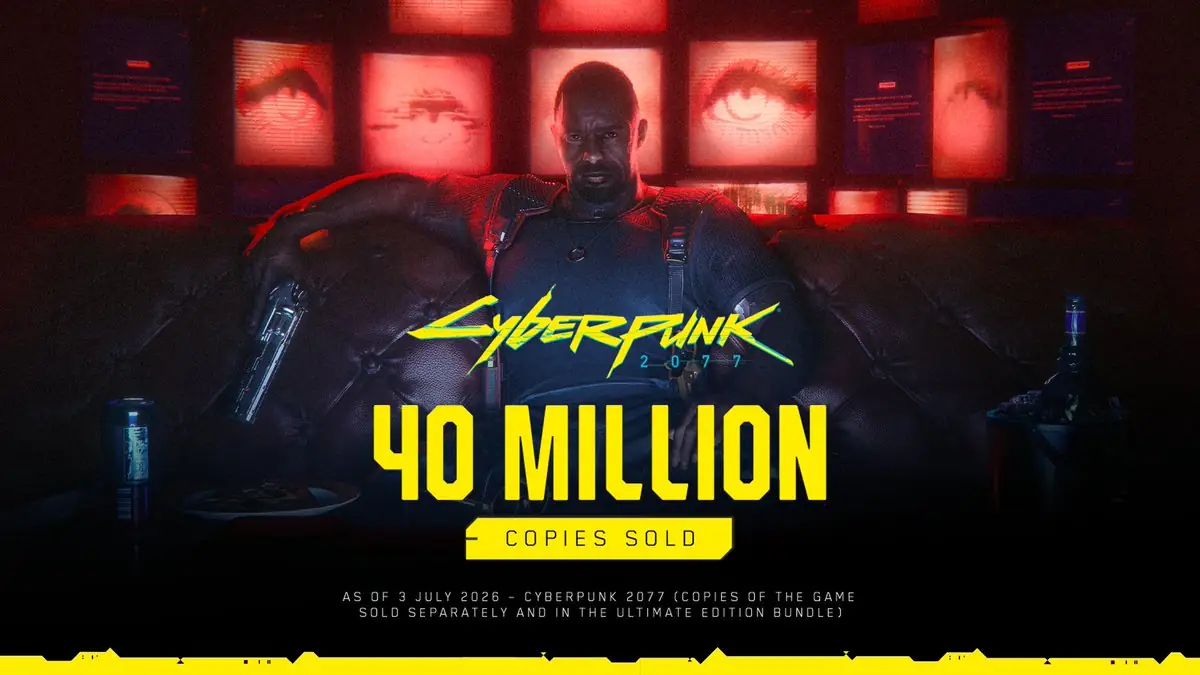
By mid-2026, Cyberpunk 2077 had passed 40 million copies sold, outselling The Witcher 3.
You reactivate, prove value, and then sell into an audience that's paying attention again. Run it backwards, and you land right back on the cliff.
But for this to work, there should be someone who sees the full picture and acts on it.
Someone has to own the loop
Take Suicide Squad: Kill the Justice League. Rocksteady built its name on single-player craft, then took on a live-service game, and the post-launch content never quite gave players a reason to keep logging in. The studio kept its roadmap and shipped season after season, but players left anyway: the game went from over 13,000 players at launch to under 100 within two months.
That gap is usually structural. On a lot of major titles, 40–50% of the budget already goes to external teams (a figure raised at a recent GDC panel on how game development has changed).
When that work is scoped as "deliver this content" with no loop attached, the DLC ships blind with no telemetry designed in, no time budgeted to tune it, and no one accountable when players leave.
At Pingle Studio, we scope it the other way. Before anything is final, we decide what to track and how to track it, and block out time and budget for post-launch tuning. One Pingle producer owns the whole thing end to end.
Let us show you how it worked with Insurgency: Sandstorm.
How Pingle helped shape Insurgency: Sandstorm
Pingle turned up to Insurgency: Sandstorm as a porting crew, with every asset checked by the developer's art director.

Level design created by Pingle Studio for Insurgency: Sandstorm.
Three years later, a 50-person Pingle team was running the game's entire content pipeline, and one of the updates that we shipped hit 98% positive on Steam.
Watch the loop:
- Content. Six major updates with new weapons, character skins, balance passes, and two original maps built from scratch.
- Data. We tracked which weapons players gravitated toward and which ones broke the balance, reading Reddit and Steam as a live feedback channel.
- Iteration. Pingle’s team handled fast, targeted tuning, with each new Operation shaped around what the community was asking for next.
- Revenue and reach. Retention held, and the audience grew. The player base tripled after the game landed on Game Pass, on the way to 2.8 million copies and a 9/10 Steam rating.
Insurgency: Sandstorm is a full live service game, but the same loop runs for a single DLC as well, with the same four stages. The scale changes, but the thinking doesn't.
So, do you need the game LiveOps?
No, you don't need the operation if you’re aiming at endless seasons and the always-on economy. But you do need the thinking, and you need it before the content locks. Decide what you'll measure, plan who fixes what, and give players a reason to come back again and again.
If you're scoping a DLC, just send us a message. We’ll come back soon to answer any questions you might have.


